
Short answer: Generative engine optimization (GEO) means building your content so that AI search tools like ChatGPT, Gemini, Claude, Perplexity and Google's AI Overviews use it as a source and mention you. The foundation is still regular SEO. What helps on top: sources, numbers, quotes and plain language. And LinkedIn, because AI answers cite it remarkably often.
As of: October 2026. AI search changes its behaviour quickly. Every number in this post comes with a source and a date.
This post has two parts you will rarely find elsewhere. First, why LinkedIn profiles and posts count in AI answers. Second, how we at CompLeadly measure every week whether the AI tools mention us, with a template you can copy.
What is generative engine optimization?
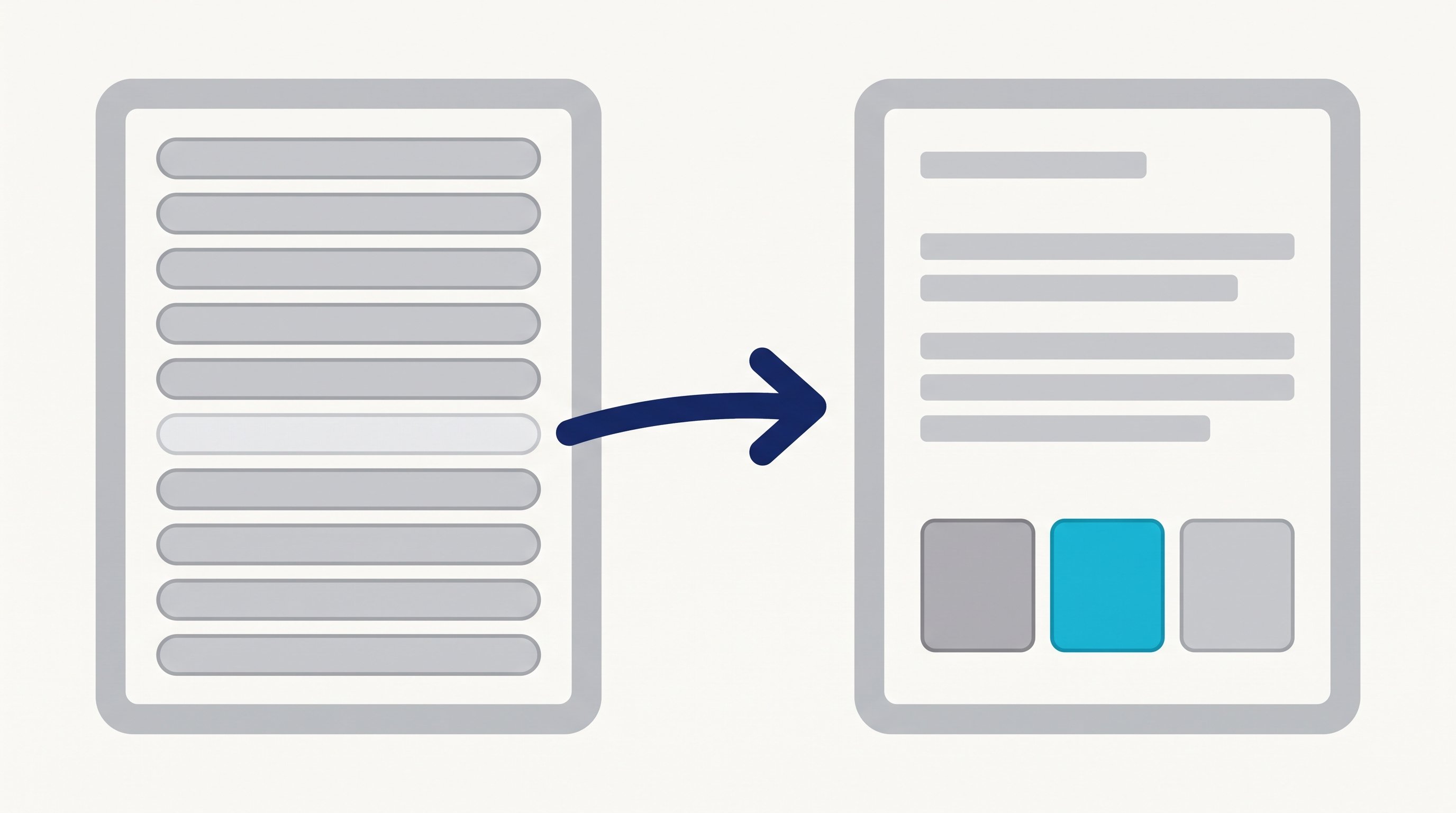
A classic search engine shows a list of links. A generative search engine writes an answer and attaches a few sources. If you appear in that answer, you get read. If you only sit in seventh place in the list of links, you often no longer do.
The term was coined by researchers from Princeton University and the Indian Institute of Technology Delhi, among others. Their paper "GEO: Generative Engine Optimization" appeared on arXiv in November 2023 and was presented in 2024 at KDD, one of the major data mining conferences (Aggarwal et al., arXiv 2311.09735, accessed 7 October 2026).
GEO and SEO: what stays the same and what is new
SEO | GEO | |
|---|---|---|
Goal | a high position in the list of links | a mention and a citation in the AI answer |
Where you see success | rankings, clicks | answer text, source lists |
Requirement | page is indexed and crawlable | the same, plus: the content can be used as evidence |
Measurement | Search Console, rank trackers | your own questions to the AI tools, citations in AI Overviews |
What counts | your website | your website and everything others write about you, including on LinkedIn |
GEO does not replace SEO. A page that no search engine can find cannot be cited by an AI either.
How AI search engines choose their sources
The providers reveal little about how they choose. Two things are officially documented.
Google: no special path. To appear in AI Overviews and AI Mode, a page has to be in the Google index and eligible to be shown with a snippet. Google puts it this way: "There are no additional requirements to appear in AI Overviews or AI Mode, nor other special optimizations necessary." Google does point out one particular feature: in the background, the AI runs several related searches on subtopics, called "query fan-out". That is how pages show up that do not rank at the very top for the original question. Google counts traffic from these answers in the Search Console performance report under the search type "Web", not separately (Google Search Central, AI features and your website, accessed 7 October 2026).
OpenAI: two crawlers, two switches. OAI-SearchBot fetches pages for search in ChatGPT, GPTBot collects content for training. You control both separately in your robots.txt. If you block OAI-SearchBot, you will not appear in ChatGPT's search answers. According to OpenAI, changes to robots.txt take about 24 hours to take effect (OpenAI, Overview of OpenAI Crawlers, accessed 7 October 2026).
That gives you the first check for any GEO work: look at your robots.txt. If you block AI crawlers across the board, you block OAI-SearchBot as well and are missing from ChatGPT's search answers.
What has been shown to work
The most robust study to date is still the GEO paper. The authors tested nine methods on around 10,000 search queries and measured how prominently a source appeared in the AI answer afterwards. The result in four points:
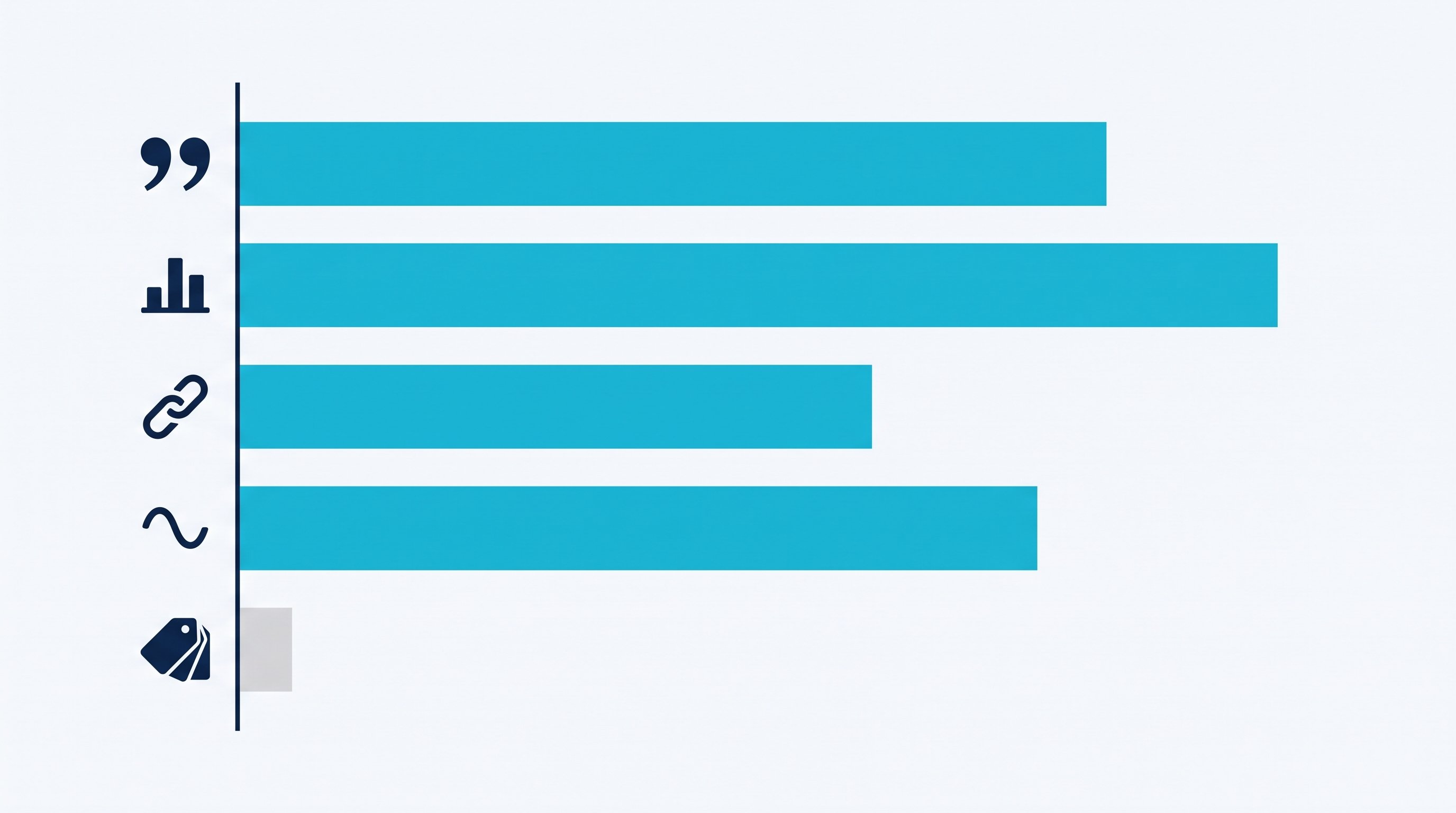
- Evidence works best. Citing sources, adding direct quotes and including statistics brought the largest improvement: 30 to 40 percent relative to the unchanged text on the metric that measures word share and position in the answer, and 15 to 30 percent on a second, subjective rating.
- Good language helps too. More fluent, easier to understand text increased visibility by 15 to 30 percent. A persuasive, authoritative tone, on the other hand, brought no notable improvement.
- Keyword stuffing does nothing. Packing more search terms into the text improved visibility "little to no", according to the paper.
- Smaller sites gain the most. A source ranked fifth in regular search gained 115.1 percent in visibility by citing sources. The source ranked first lost 30.3 percent.
On top of that, which method works best depends on the topic. Statistics helped most with law and government topics, quotes with society and history topics.
How to read these numbers correctly. In its abstract, the paper speaks of "up to 40%" more visibility. That does not mean ChatGPT will mention you 40 percent more often after a rewrite. The values are relative improvements on metrics the researchers defined themselves. Testing was done mainly with their own search engine based on GPT-3.5, plus Perplexity. Today's models are different ones. The direction is still plausible and matches what Google recommends: content that proves something, not content that only repeats terms.
What this means for your content
- The answer goes in the first paragraph, in 40 to 60 words. An AI looking for a definition finds it there.
- Every number has a source and a date. Without a source, leave it out.
- Quote experts word for word, with name and role.
- Your own data beats other people's. A number that only exists on your site can only be backed up by citing you.
- Tables and clear subheadings make statements easy to find.
- Structured data such as FAQ schema matches the visible text exactly. Google explicitly requires this.
Why LinkedIn counts in AI answers
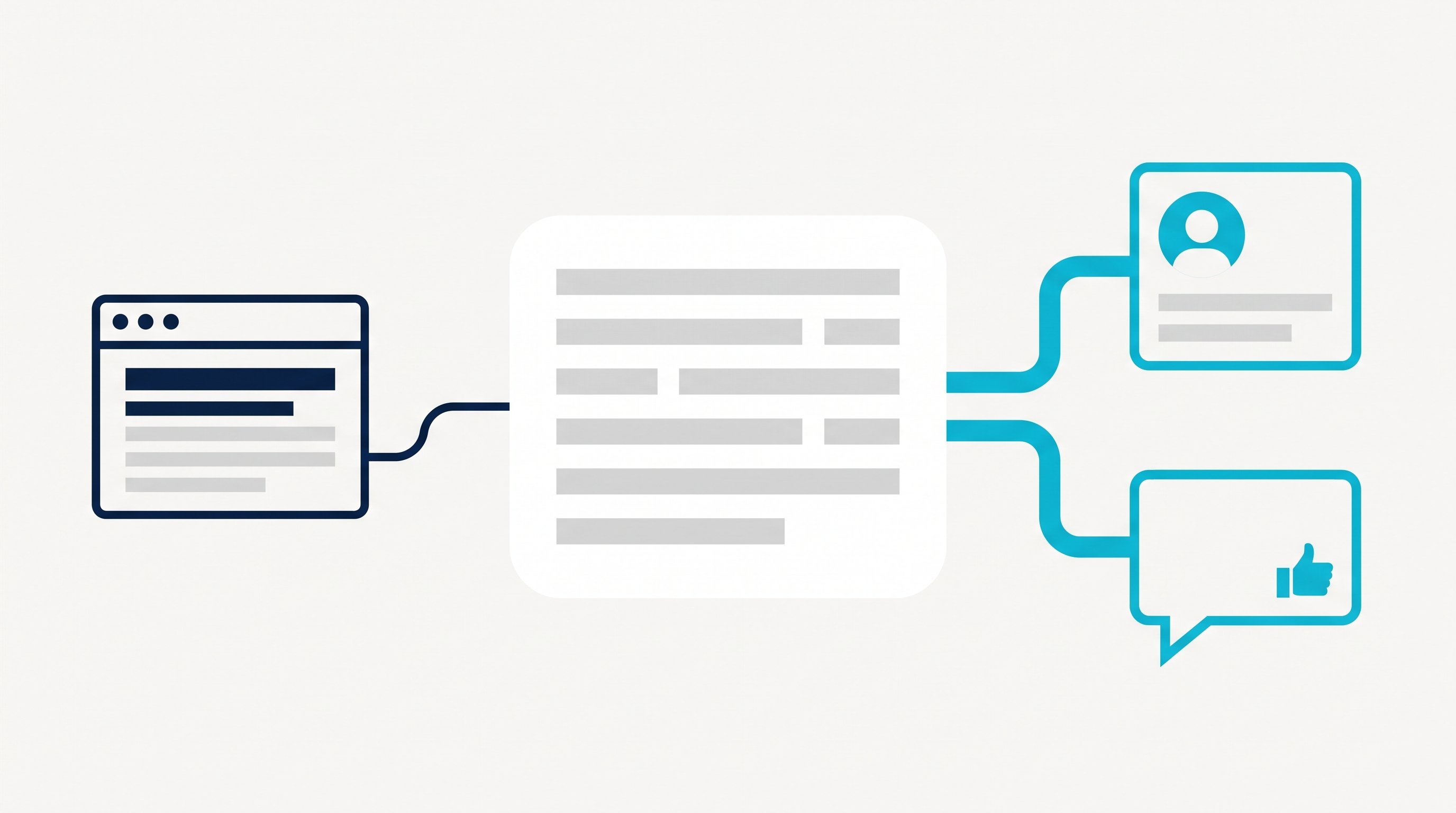
Everything so far applies to any website. Here is the part most guides leave out: AI answers do not only cite websites. They cite LinkedIn too, and often.
What the Semrush study shows
In January and February 2026, Semrush analysed 325,000 prompts sent to ChatGPT Search, Google AI Mode and Perplexity and found 89,000 different LinkedIn URLs cited as sources (Semrush, LinkedIn AI Visibility Study, Margarita Loktionova, 10 March 2026, accessed 7 October 2026). The key findings:
Finding | Value |
|---|---|
ChatGPT Search answers with LinkedIn as a source | 14.3% |
Google AI Mode answers with LinkedIn as a source | 13.5% |
Perplexity answers with LinkedIn as a source | 5.3% |
Average across all three | 11% |
Share of individual members in LinkedIn citations (ChatGPT Search, AI Mode) | 59% |
Share of company pages in LinkedIn citations (Perplexity) | 59% |
Cited posts that are original content (not reshares) | around 95% |
Semrush also found that articles with 500 to 2,000 words and posts with 50 to 299 words are cited most often, mainly educational content and advice.
Three caveats belong with these numbers before you pass them on:
- This is about answers, not citations. 14.3 percent means that a LinkedIn link appears somewhere in 14.3 percent of the answers. It says nothing about LinkedIn's share of all sources.
- Semrush worked with LinkedIn on the study. The study says so itself: "we collaborated with LinkedIn to obtain deeper insights".
- The study does not state the language or country of the prompts. Whether the values hold for your language and market is an open question.
Other analyses reach clearly different values, depending on the metric and the time period. If you read "LinkedIn is the most important AI source", ask what exactly was counted.
What we see in our own data
We track which pages Google's AI Overviews cite as sources for around 2,000 search terms in six languages. Over the last 30 days (as of 7 October 2026), linkedin.com was among the most frequently cited third-party domains, in first place by number of citations, closely followed by YouTube. The citations are not limited to LinkedIn help pages. They include posts (/posts/), articles (/pulse/) and company pages.
The caveat here is even bigger than with Semrush: almost all of our search terms are about LinkedIn. That LinkedIn gets cited often for questions about LinkedIn is no surprise. You cannot extrapolate anything for other industries from it.
What follows from this
Both data sources point in the same direction: a LinkedIn profile with your own expert posts is a place where an AI can find you, even if your website does not yet make it into the answer. According to Semrush, content from individual members matters most here, not only company pages. How to write posts that build trust is covered in Why LinkedIn content is your best salesperson.
In practice, that means:
- Your own posts instead of reshares. Around 95 percent of cited posts are originals.
- Explain instead of advertise. A post that answers a question works as a source. A post that promotes an offer barely does.
- Maintain your profile and your company page. According to Semrush, Perplexity draws mainly on company pages, ChatGPT and Google AI Mode more on people.
- A network that sees your posts. A post that nobody reads, comments on or shares remains one page among millions. How to build connections in your target audience deliberately is shown in LinkedIn Networking: 10 Ways to Build Connections.
Measure your mentions: our method step by step
Most GEO guides stop at the recommendations. But you only know whether they work if you measure. You do not need a tool for that. A spreadsheet and a fixed routine are enough.
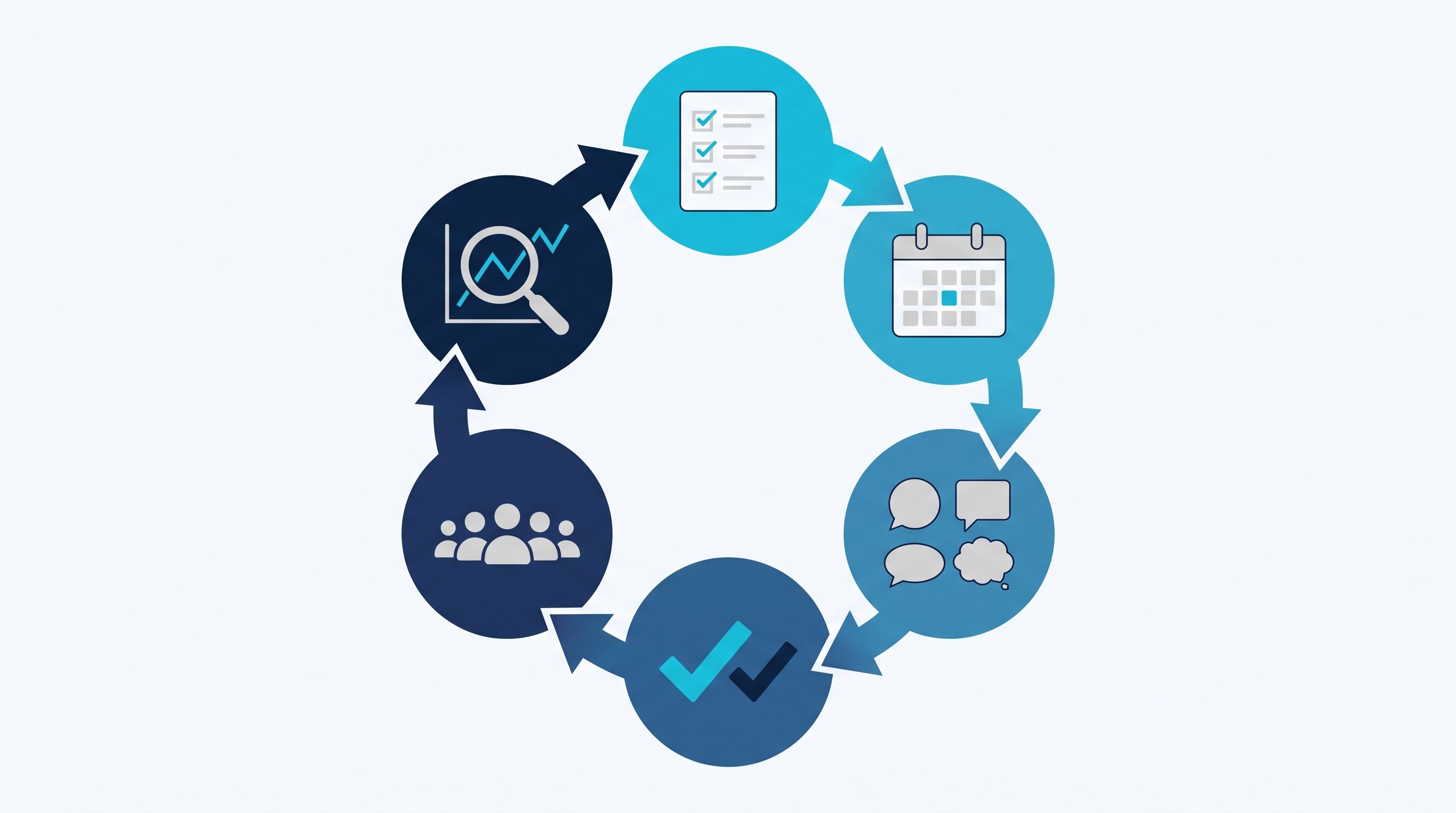
This is how we work at CompLeadly. Since September 2026, we have asked ChatGPT, Gemini, Claude and Perplexity the same 24 questions every week. For ChatGPT and Gemini, we evaluate the answer you see in the regular interface. For Claude and Perplexity, we evaluate the API answer with web search turned on.
Step 1: Write a fixed question set
Write down 15 to 30 questions your customers would ask an AI. Phrase them the way people ask, not like search terms. The mix matters:
- Questions without your name. They show whether you appear in your category at all. Example: "Which tool is good for LinkedIn prospecting from Germany?" For us, 17 of the 24 questions are built this way.
- Questions with your name. They show what the AI tools know about you and whether it is correct. Example: "Is [brand] safe?" or "How much does [brand] cost?". For us, that is 7.
- Several languages, if you sell in several countries.
After that, the set stays the same. If you ask different questions every week, you cannot see any trend.
Step 2: Ask at the same time every week
An AI does not give the same answer every time. The same question can bring up your name today and not next week. That is why individual answers do not count, the trend over several weeks does. We ask once a week, always on the same day.
Step 3: Cover several models
ChatGPT, Gemini, Claude and Perplexity draw on different sources and answer differently. A mention in Perplexity says nothing about ChatGPT. At a minimum, include the models your customers use.
Step 4: Record mentions and citations separately
This is the point most people miss. There are two ways to appear in an AI answer:
- Mentioned: your name appears in the answer text.
- Cited: one of your pages appears in the source list.
Each can happen without the other. We have had answers where one of our pages was listed as a source, but our name was missing from the answer text. In that case your page supplied the knowledge, but nobody knows it came from you. Write down the exact URL for every citation. That shows you which pages work for the AI tools.
Step 5: Track competitors
Write down every brand that is mentioned instead of you or alongside you. After a few weeks, you will see who is the default answer for which question. Those are the questions where you are missing a source.
Step 6: Analyse and act
Once a month, look at the trend: which questions never bring a mention? Which pages get cited? For the gaps, write a page that answers exactly that question. We evaluate new pages at the earliest two to four weeks after they go live, because they first have to make it into the search indexes.
Template to copy
Week | Question no. | Question | With brand? | Model | Mentioned? | Own URL cited | Competitors mentioned | Note |
|---|---|---|---|---|---|---|---|---|
Week 41 | Q01 | Which tool is good for LinkedIn prospecting from Germany? | no | ChatGPT | yes | /comparison | A, B | name in second paragraph |
Week 41 | Q01 | Which tool is good for LinkedIn prospecting from Germany? | no | Perplexity | no | /blog/… | A, C | cited but not mentioned |
Week 41 | Q12 | Is [brand] safe? | yes | Gemini | yes | /privacy | none | security page missing from sources |
Each week this gives you questions times models rows, 96 in our case. From the table, you count three values per model: the share of answers with a mention, the share with a citation and the most frequent competitors.
What we have seen so far
We do not publish absolute numbers, because with 24 questions they fluctuate strongly and go out of date quickly. We do show the direction. Between 24 September and 1 October 2026, the number of answers citing one of our pages as a source rose from 5 to 11 in Gemini and from 9 to 13 in Perplexity. A week later, on 8 October, both were almost unchanged at 10 and 13. So the jump was not a one-off. ChatGPT and Claude barely moved over the same period.
More interesting than the number is which pages get cited. In the run on 1 October, they were mainly:
- Comparison pages, such as our comparison overview and CompLeadly vs. Waalaxy
- Vendor lists, such as LinkedIn automation from Germany
- Knowledge base articles that answer a single question
- Use case pages, such as recruiting and Active Sourcing on LinkedIn
For general category questions like "best LinkedIn automation tool", the models mostly name well-known competitors. We do not yet have a source there that changes this. For questions about trust and security, the AI tools cite our legal notice, our privacy policy and our security page. That is a practical lesson: if you want an AI to answer a trust question about you correctly, you need a page that answers exactly that question.
GEO in sales, recruiting and job hunting
The method is the same. The questions change.
Sales: your buyers' questions
In B2B sales, buyers ask an AI about vendors, prices and alternatives before they talk to a salesperson. So the questions in your set are: "Which vendors are there for [category] in [region]?", "How much does [category] cost?", "Alternative to [competitor]". The pages you need for these are exactly the ones that get cited for us: comparisons, pricing pages, use cases. Add the founder's or head of sales' LinkedIn profile with posts that answer customer questions. How to use AI assistants yourself for LinkedIn prospecting is covered in ChatGPT and Claude as a LinkedIn Bot.
Recruiting: your candidates' questions
When candidates ask an AI about an employer, it answers with what it finds: careers page, review sites, the LinkedIn company page, posts by employees. So put questions in your set like "What is it like to work at [company] as a [role]?" or "Which employers in [city] are hiring [role]?". If nothing about you shows up there, others answer the question. For your employer brand, that means a company page with real insights and team leads who write about their work. How to reach candidates directly at the same time is shown in the recruiting use case.
Job seekers: your profile as a source
When a recruiter asks an AI who in a region has experience with a particular topic, the answer can draw on LinkedIn profiles and posts. According to Semrush, 59 percent of LinkedIn citations in ChatGPT Search and AI Mode come from individual members. For job seekers, that means a clear headline, an About section with your topics and a few expert posts make you findable. Test it yourself. Ask an AI for experts on your topic in your city and see who gets named. How to build your profile for this is covered in Perfect LinkedIn Profile: Career Success in 6 Steps.
With CompLeadly: build your network and presence on LinkedIn
There is no guarantee of mentions in ChatGPT, not even with software. CompLeadly helps with the part of LinkedIn that takes time: building your network in your target audience and being present where you want your posts to be read.
- Connect with your target audience. You define a target audience, CompLeadly sends the connection requests. The free version sends 2 per day, from Basic upwards there is no daily limit, according to the pricing page.
- Profile visits. Free for up to 25 per day. From Basic upwards, you can visit profiles and follow them at the same time.
- Follow-ups for contacts who did not reply to your first message.
- Liking posts and endorsing skills from Premium upwards. That way your contacts see your name between your own posts too.
- Smart Comment AI as a separate package, with Sales Navigator: an AI writes comments on posts from your target audience. By default, they land in a review list and you approve every comment. Sending without review is switched off out of the box. Why comments bring reach on LinkedIn is covered in LinkedIn commenting strategy: post less, comment more.
CompLeadly runs as a desktop app on your own computer. If you want your workflows to keep running while your computer is off, you can book cloud operation as an add-on. You write the posts yourself, because those are exactly what should work as a source. Founders will find the workflow in the founders use case, and all plans are on the pricing page.
Checklist: GEO in 12 steps
- Check your robots.txt: search crawlers such as OAI-SearchBot and Googlebot may read your pages.
- Important pages are in the Google index and may appear with a snippet.
- Every page answers the main question in the first paragraph.
- Every number has a source and a date.
- At least one number, measurement or experience of your own per page.
- Comparison and pricing pages exist and are up to date.
- One page answers questions about trust and security.
- FAQ schema and other structured data match the visible text.
- Your LinkedIn headline and About section say what you stand for.
- You regularly publish your own explanatory posts on LinkedIn.
- A fixed question set runs against several AI tools every week.
- Mentions, citations and competitors are recorded separately in your spreadsheet.
FAQ: Generative engine optimization
What is generative engine optimization?
Generative engine optimization (GEO) is the work of getting AI search tools like ChatGPT, Gemini, Claude, Perplexity and Google's AI Overviews to use your content as a source and mention you in their answers. The term comes from a 2023 research paper.
What is the difference between GEO and SEO?
SEO aims for a good position in a search engine's list of links, GEO for a mention or a citation in an AI answer. The foundation is the same: a page has to be indexed and crawlable. GEO also puts weight on statements backed by evidence, clear answers and sources outside your own website.
Do I need special optimization for Google AI Overviews?
No. Google states that there are no additional requirements and no special optimizations for AI Overviews and AI Mode. The page has to be in the index and eligible to be shown with a snippet.
How do I find out whether ChatGPT mentions me?
Ask ChatGPT and the other AI tools the same questions every week, with and without your name. Record separately whether you are mentioned in the text and which of your pages appear as sources. Only the trend over several weeks is meaningful, because the answers fluctuate.
Why does LinkedIn matter for GEO?
AI search tools cite LinkedIn often. In a Semrush study of 325,000 prompts, LinkedIn appeared as a source in 14.3 percent of ChatGPT Search answers and in 11 percent on average across the three systems studied. In ChatGPT Search and Google AI Mode, 59 percent of these citations came from individual members.
Does keyword stuffing help with GEO?
No. In the GEO paper by Aggarwal and colleagues, adding extra search terms brought little or no improvement. Sources, quotes and statistics worked much better.