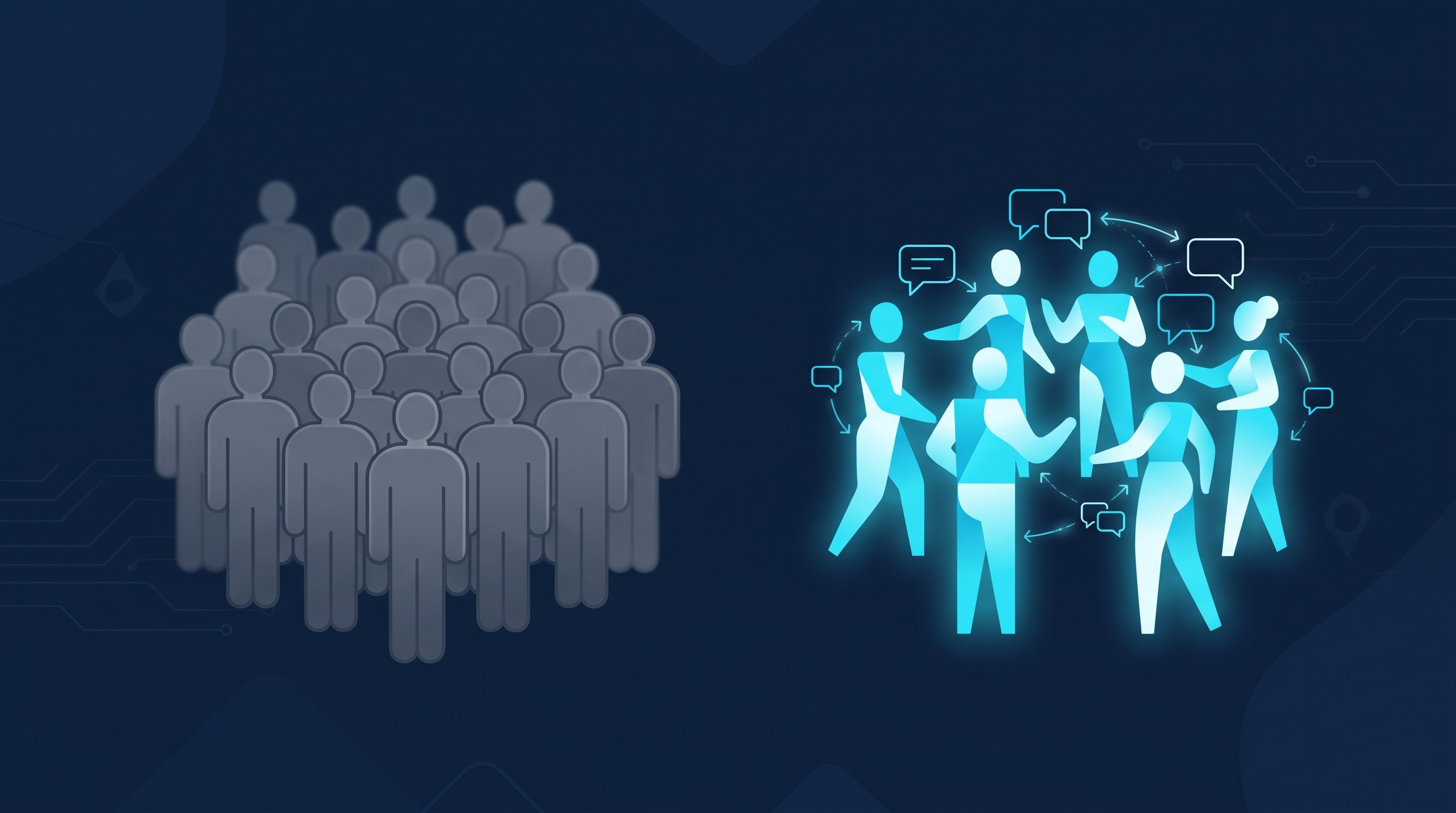
Buying LinkedIn accounts or followers raises a number, but not the number of people who read your posts or buy from you. LinkedIn ranks the feed for each reader by their interests and interactions, so followers who don't care about your topic don't read along. What works better: one real account per team member and a network you build yourself.
This article covers what is on offer when people search for "buy LinkedIn accounts" or followers, what LinkedIn's own rules say about it, why the number alone does little, and how to build followers and connections that fit your business. We deliberately do not name any sellers. As of October 2026.
What is sold as LinkedIn accounts, followers and connections
Searches around this topic revolve around three things:
- Followers: packages with a fixed number of new followers for your personal profile or your company page.
- Connections: connections a vendor arranges for you so your connection count rises quickly.
- Whole accounts: ready-made, often older LinkedIn accounts with an existing network that the buyer takes over, for example to work with several profiles as a team.
All three have one thing in common: you are buying a number or an empty shell. Who is behind those followers, and whether they belong to your target audience, is not up to you.
What LinkedIn's own rules say
LinkedIn addresses this in several places itself. We quote the passages word for word and link each source.
- No transferring accounts: In section 2.2 of the User Agreement you agree to "not share or transfer your account or any part of it," with the example "sell or transfer the personal data of others by transferring your connections."
- Real identity: The "Dos" include "Use your real name on your profile," and the "Don'ts" include "Create a false identity on LinkedIn" and "use or attempt to use another's account" (section 8 of the User Agreement).
- Real engagement: The Professional Community Policies ask: "Please make the effort to create original, professional, relevant, and interesting content in order to gain engagement. Don't do things to artificially increase engagement with your content." And: "We don't allow fake profiles or entities."
Both pages retrieved October 3, 2026, the User Agreement in the version effective November 3, 2025. Together they describe how LinkedIn wants the platform to work: real people, their own accounts, reach through content. That is also where the approach that brings customers over time starts.
Why bought followers don't bring reach
Reach on LinkedIn doesn't come from the size of your follower count. It happens one reader at a time. The LinkedIn Help article LinkedIn relevance: Optimizing the member experience explains how the feed decides: identity (profile, workplace, skills), content (how often a post is viewed or engaged with, whether it offers knowledge or advice, how recent it is, whether it comes from someone the reader follows) and activity (what the reader has reacted to, who they interact with often, which topics interest them). Retrieved October 3, 2026.

The math is simple. A follower who isn't interested in your topic and never reacts to your posts sends the feed no signal that carries your post further. The number under your name goes up, the number of people reading you doesn't. What LinkedIn says about formats and reach, and what the large studies measure, is in our article on the LinkedIn algorithm in 2026.
And why followers aren't customers yet
Customers come from conversations with people who have a problem you solve. A purchased list isn't put together with that in mind. Whether those accounts sit in your market is pure chance. What counts for your business is how many people from your target audience read you and talk to you, not how many follow you in total.
Criterion | Bought followers or connections | A network you built |
|---|---|---|
Who follows you | Chosen by the vendor, not by your target audience | Chosen by you: customers, candidates, decision-makers in your market |
Signal for the feed | Only if those accounts react to your posts | Reactions and comments from people who care about the topic |
Conversations | No reason to talk, nothing in common | A reason to talk through a connection, a comment or a profile visit |
Speed | Visible right away | Grows with every week you put in |
Several real accounts on your team instead of bought accounts
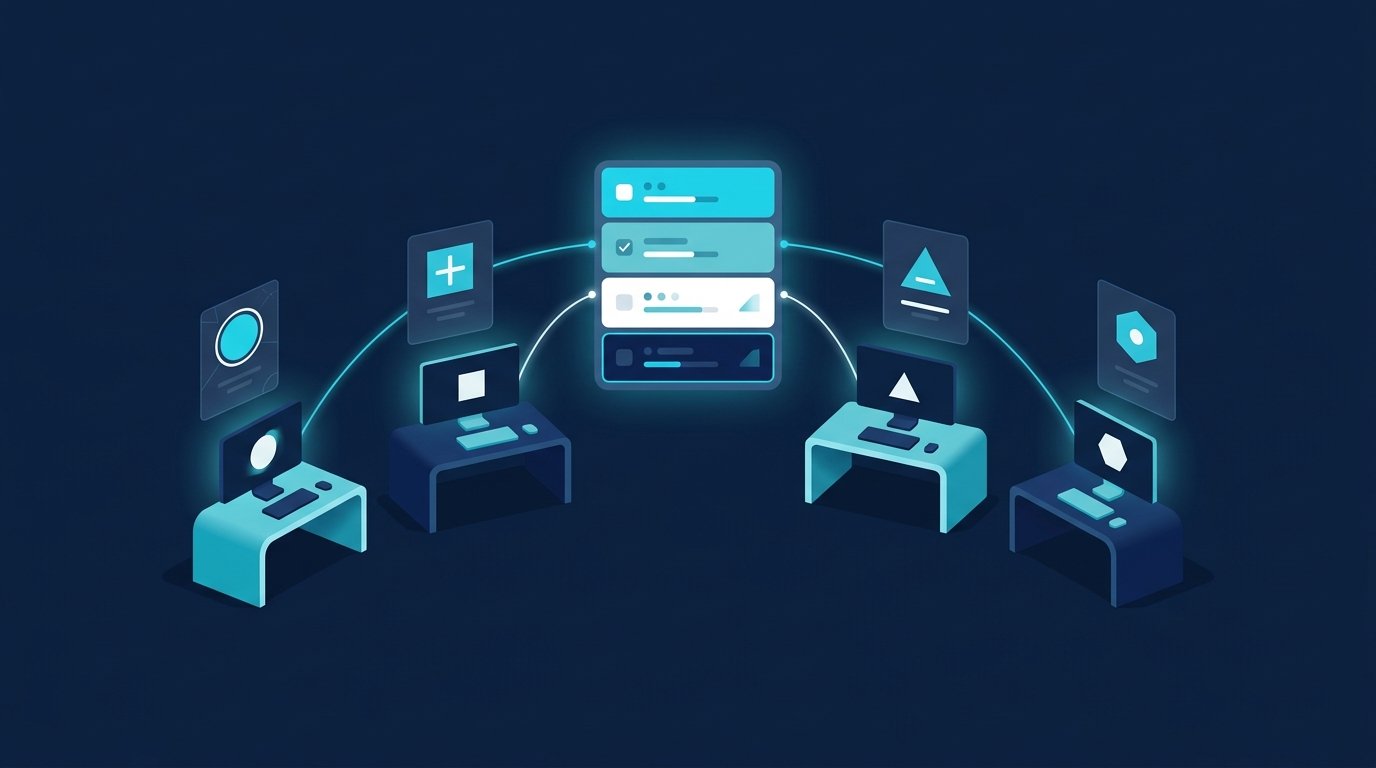
People who buy accounts often want to reach out with several profiles as a team. You can do that without anyone else's account: every person on the team works with their own LinkedIn profile, the company gets a company page, and outreach is split so nobody contacts the same person twice. The details, including LinkedIn's rules on duplicate accounts, are in Manage multiple LinkedIn accounts.
Checklist for team accounts
- One LinkedIn account per person, under their real name, with their own login.
- Complete profiles: photo, headline, current position at the company.
- The company page is linked to everyone's profile, and team members share its posts in their own words.
- The target audience is split, for example by region, industry or account list.
- It is recorded who owns which contact, so nobody reaches out twice.
- Everyone writes in their own voice, no identical texts from five profiles.
How to run your account cleanly day to day, with an overview of LinkedIn's own guidance on pace and invitations, is covered in our guide to running your account.
Grow organically: how to build LinkedIn followers
Followers come when people in your market notice you and get something out of following you. Four habits do most of the work.

1. A profile worth following
Your real name, a photo, a headline that says who you help with what, and an About section with one clear topic. Verification also shows that a real person is behind the profile. How it works is explained in LinkedIn verification.
2. Post regularly on one topic
Pick a topic your audience cares about and a rhythm you can keep. According to its own help pages, LinkedIn looks at whether a post offers knowledge or advice and how constructive the conversation underneath is. Posts that answer a concrete question from your market collect the reactions the feed needs.
3. Comment on other people's posts
A thoughtful comment under a post by someone in your market is read by exactly the people you want to reach. Good comments are short posts: your own experience, a number, a follow-up question.
4. Connect on purpose
Invite people from your target audience with a short, personal note. Following doesn't replace connecting, both have their place: LinkedIn caps 1st-degree connections at 30,000, while the number of your followers is unlimited. Once you reach 30,000 connections, "Follow" becomes the default button on your profile. Source: LinkedIn Help: Network size limit, retrieved October 3, 2026.
Three templates for requests that turn into followers
A good note names the reason in one sentence and asks for nothing. To copy, just replace the brackets:
Hi [First name], you have been following me for a while, thank you. I write about [topic] regularly and would be glad to be connected directly.
Hi [First name], your comment on [topic] under [name]'s post gave me a new angle. Happy to connect, I post about [topic] myself.
Hi [First name], we both work with [audience or industry]. I share what works in [your topic] every week here, maybe some of it is useful to you.
If they accept, they see your posts as a connection from now on. If they don't, they can still follow you. Either way it's a real reader, and that is the whole point.
How CompLeadly helps you grow, in sales, recruiting and job search
CompLeadly doesn't replace content, but it takes the manual work out of connecting. The desktop app runs on your own computer and works with your own LinkedIn account. You build an audience from a LinkedIn or Sales Navigator search, and a workflow visits the profiles, connects with a note, then sends a first message once the request is accepted, followed by follow-ups that stop at the first reply. You can also use your followers and profile visitors as an audience, for example to connect with people who already follow you.
- Sales: Decision-makers from your Sales Navigator search become the audience. From Basic, you can automatically follow them when the profile is visited.
- Recruiting: A Recruiter Lite search or pipeline serves as the source, with one workflow per role. Candidates get to know you through your real profile. More on the page for recruiters.
- Job seekers: Recruiters and hiring managers at the companies you want to join become your audience. Profile visits, connection requests with a note and a follow-up also run in the free version, with daily limits.
On a team, every person gets their own CompLeadly access for their own profile. From Premium, a team blocklist holds back contacts someone is already looking after. You start with a 10-day free trial with all features, no credit card required. After that your account continues in the free version with basic features and daily limits, for example 2 connection requests and 25 profile visits per day. Plans are on the pricing page.
FAQ: Buying LinkedIn accounts and followers
Can you buy LinkedIn accounts?
There are offers for it. In its User Agreement, though, LinkedIn asks members to "not share or transfer your account," and its "Don'ts" include creating a false identity and using another person's account. For teams, that means every person works with their own account.
Can you buy LinkedIn followers?
Sellers offer follower packages. LinkedIn's Professional Community Policies say "Don't do things to artificially increase engagement with your content" and don't allow fake profiles. The purchased number also brings no readers, because the feed is ranked for each reader by their interests.
Do bought followers increase reach on LinkedIn?
Not reliably. According to LinkedIn Help, the feed decides for each reader which posts they see, based on profile, content and activity. Followers who aren't interested in your topic and don't react won't carry your post further.
How do I get more followers on LinkedIn?
With a complete profile, regular posts on a topic your audience cares about, thoughtful comments on other people's posts, and targeted connection requests with a personal note. It takes weeks, but it brings followers who read and reply.
How many followers can you have on LinkedIn?
As many as you like. According to LinkedIn Help, only 1st-degree connections are capped, at 30,000. Once you reach that number, "Follow" becomes the default button on your profile.