
In short: BANT checks four things: budget, authority, need and timing. That works for smaller deals where one person buys. For large deals with several stakeholders, MEDDIC or MEDDPICC fits better, and when you want to lead with the problem, CHAMP does. Below you get the questions, a copy-ready template and a LinkedIn prospecting example for each method.
Last updated: November 2026. For what a lead is and how it differs from a contact or a prospect, see What is a lead?. For how to ask questions that surface problems in a conversation, read SPIN Selling. This post answers the next question: how do you decide whether a lead is qualified and whether the next meeting is worth it?
Lead qualification frameworks: what BANT, MEDDIC and the rest are for
A qualification framework is a short checklist of points you need to clear before the next step. It doesn't replace a good conversation, but it makes sure everyone on the team asks the same questions and uses the same yardstick. Without one, one rep counts every friendly reply as a hot lead while another waits for a signed letter of intent.
How this differs from SPIN: SPIN is a questioning technique that helps you draw out problems and their consequences. A framework like BANT is the list you check at the end to see what you know and what's still missing. The two work well together.
Method | Letters | Fits when | Effort |
|---|---|---|---|
BANT | Budget, Authority, Need, Timing | Smaller deals, one person decides, short sales cycle | low |
CHAMP | Challenges, Authority, Money, Prioritization | You want to start with the problem instead of the budget | low to medium |
MEDDIC | Metrics, Economic Buyer, Decision Criteria, Decision Process, Identify Pain, Champion | Larger deals with several stakeholders and a set buying process | high |
MEDDPICC | MEDDIC plus Paper Process and Competition | Like MEDDIC, with contracts, procurement and competitors in view | high |
GPCTBA/C&I | Goals, Plans, Challenges, Timeline, Budget, Authority, Negative Consequences, Positive Implications | Complex products that tie deep into the customer's strategy | high |
One rule applies to every framework: qualification starts before the conversation. If you narrow your audience carefully up front, you weed out fewer leads later. How to define your ideal customer profile is covered in its own post, and the free ICP generator gives you a first draft.
BANT: budget, authority, need, timing
BANT gets by with four points and is quick to explain. IBM demonstrably used it: a publicly available IBM template for sales partners from November 2008 is titled "Budget Authority Need Timeframe (BANT) Criteria Template." Partners had to describe all four points for every opportunity they registered, or it was rejected as incomplete. The template doesn't show when or where BANT first came about. Note the T: IBM writes "Timeframe" and asks for the key decision milestones, not just a single date.
- Budget: Is money set aside for this, or when and how will it be approved?
- Authority: Does your contact decide alone, or who else has to sign off?
- Need: What specific problem needs solving?
- Timing: When should a solution be in place, and what milestones come before that?
When BANT fits: modest price points, short sales cycles and buyers who decide for themselves. Typical examples are services for small and midsize companies, software with a monthly price or consulting packages for freelancers. For deals that involve procurement, a business unit and the executive team, BANT falls short, because "authority" there is rarely one person.
BANT template:
Point | What you know | Source (chat, call, profile) | Status |
|---|---|---|---|
Budget | [e.g. "Q1 budget approved"] | [source] | open / cleared |
Authority | [e.g. "decides together with the CEO"] | [source] | open / cleared |
Need | [specific problem in the customer's words] | [source] | open / cleared |
Timing | [target date and next decision milestones] | [source] | open / cleared |
LinkedIn prospecting example: You sell sales training. Mark, CEO of a 25-person agency, replies to your opener that his two new account managers barely book any meetings. Need is clear, and as CEO he's very likely the authority. Budget and timing are still open. Instead of asking about both directly, you write: "Is this something for this quarter, or are you looking at next year?" The answer settles timing and usually tells you whether money is planned too.

MEDDIC and MEDDPICC: for large deals with many stakeholders
According to meddicc.com, the website of the training company of the same name, MEDDIC was created in 1996 at the software company PTC. Dick Dunkel developed it there with Jack Napoli under SVP John McMahon. Two letters were added later: P for Paper Process and a second C for Competition. The result is MEDDPICC.
- Metrics: What measurable result does the customer expect, such as more meetings per month or fewer hours of manual work?
- Economic Buyer: Who ultimately releases the money?
- Decision Criteria: What will the decision be based on, such as price, integration, an IT review or references?
- Decision Process: Which steps and people does the decision go through, and in what order?
- Identify Pain: What problem is big enough that something has to change?
- Champion: Who inside the company wants the solution and pushes for it internally?
- Paper Process (MEDDPICC): What's the path from yes to signature, including procurement, legal and master agreements?
- Competition (MEDDPICC): Which alternatives is the customer weighing, including "we'll build it ourselves" or "we'll do nothing"?
When MEDDIC fits: sales cycles of several months, prices that need sign-off at multiple levels, and customers with their own procurement team. For an offer one person can buy with a credit card, MEDDIC is overkill.
MEDDPICC template:
Point | Question to ask yourself | Name / answer |
|---|---|---|
Metrics | Which number does the customer want to improve, and by how much? | [ ] |
Economic Buyer | Who approves the budget? Have I talked to them yet? | [ ] |
Decision Criteria | Which three criteria matter most? | [ ] |
Decision Process | What steps lead to the decision, and when? | [ ] |
Paper Process | Who reviews the contract and purchase, and how long does it take? | [ ] |
Identify Pain | What happens if the customer changes nothing? | [ ] |
Champion | Who is driving this internally, and why? | [ ] |
Competition | Which alternatives are in the running? | [ ] |
LinkedIn prospecting example: You sell software for sales teams to companies with more than 200 employees. On LinkedIn you reach out to Sarah, a sales team lead. Sarah is excited and becomes your champion, but she doesn't control the budget. So you ask in the chat: "Who else would be involved if you rolled out something like this?" Sarah names the VP of Sales as the economic buyer and IT, which reviews new tools. You find the VP on the company's LinkedIn page and connect, referencing your conversation with Sarah. The IT review goes under Decision Process.
CHAMP: the problem first, then the money
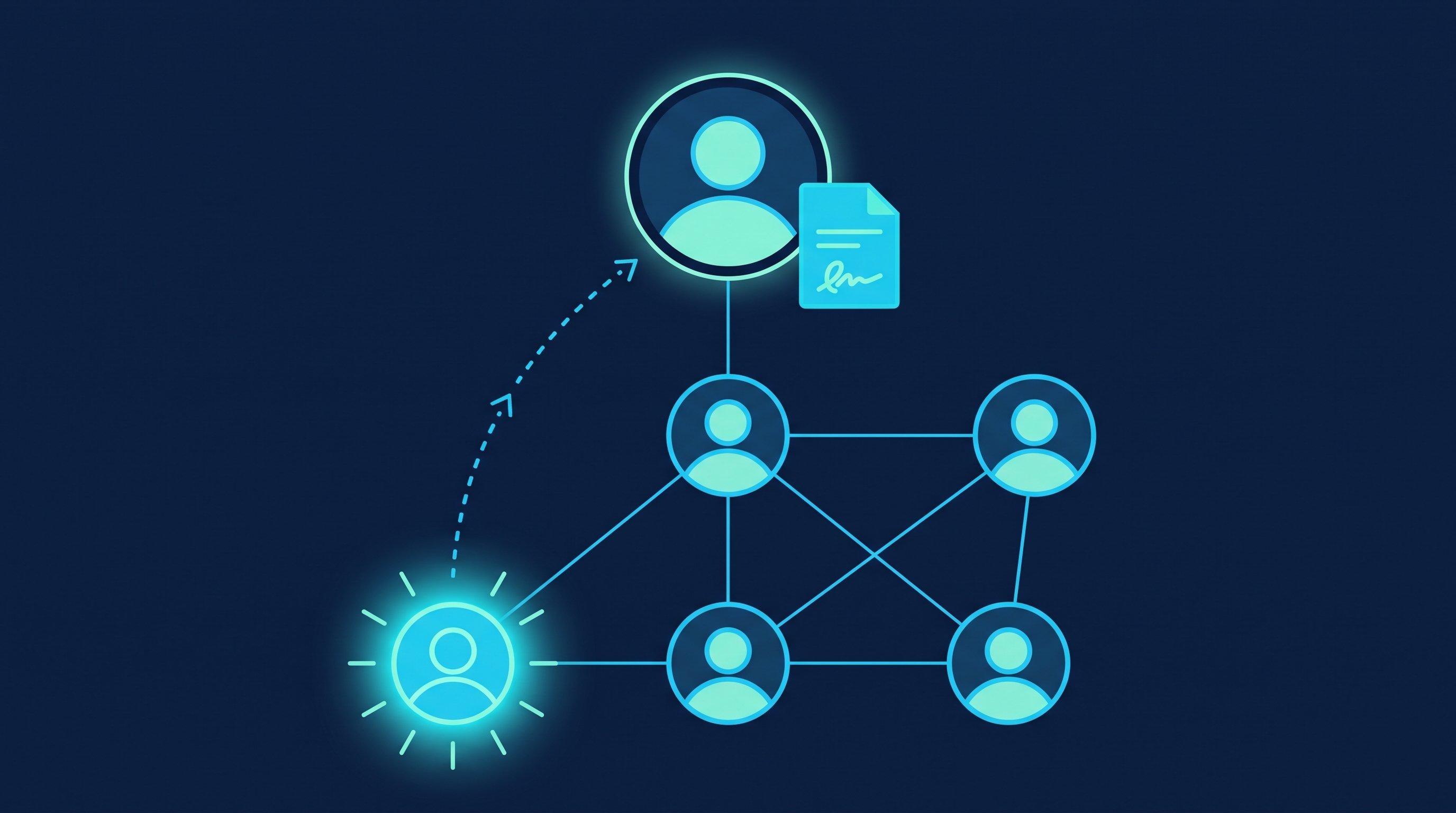
CHAMP flips the order of BANT and starts with the customer's challenges. According to HubSpot, the letters stand for Challenges, Authority, Money and Prioritization.
- Challenges: What challenge is your contact facing, and how does it play out?
- Authority: Who is involved in the decision?
- Money: Is money available, or can the investment be justified?
- Prioritization: How important is this compared with other projects?
When CHAMP fits: when your leads shut down the moment you say "budget," or when you solve a problem the customer hasn't planned as a project yet. Prioritization separates interest from a real project: a problem with no priority often sits for a long time.
CHAMP template for the chat:
- Challenges: "What's eating up the most time in [area] right now?"
- Authority: "If you tackle this, who would be part of the decision?"
- Money: "How do you usually handle things like this, with a set budget or case by case?"
- Prioritization: "Where does this sit on your list right now, near the top or someday?"
LinkedIn prospecting example: Lena runs marketing at a machinery manufacturer. When you ask about her biggest time sink, she writes that trade show contacts go cold after the event. Challenge cleared. When you ask about priority, she answers: "Honestly, not until after the next show in March." Now you know a meeting doesn't make sense yet, but a follow-up in February does. You'll find suitable messages in the follow-up templates.
GPCTBA/C&I in brief
HubSpot says it developed GPCTBA/C&I internally and describes it on its sales blog. The framework has three parts: Goals, Plans, Challenges and Timeline check whether your offer fits the customer's goals. Budget and Authority check whether the purchase pays off and who decides. Negative Consequences and Positive Implications ask what happens if the customer misses or hits the goal.
For most LinkedIn conversations, that's too much. The last part is the useful one: asking "What happens if you miss that goal?" quickly shows how urgent a topic is. The same idea drives the implication questions in SPIN.
Qualifying in LinkedIn messages: how to spread out the questions
In a chat, you don't fire off eight questions in a row. A framework is the list in your head, not the script for your first message. A rule of thumb: one question per message, and only the one that follows from the last reply.
- Before you reach out: Role, company size and industry come from your search and the profile. Those are the parts of authority and need you can know without talking.
- Opener: one question about need, drawn from the profile. No pitch, no link.
- After the first reply: dig into need, then timing or priority.
- Before the meeting: authority and budget, often in one question: "Who else would be involved if you decide on this?"
- In the meeting: the remaining points, and for MEDDIC mainly decision process and paper process.
How to prepare the first call itself is covered in Discovery Call. Which stages a lead moves through afterward, and when it counts as qualified, you define in your sales pipeline. To work out what a qualified lead can cost, use cost per lead.
Where CompLeadly helps
CompLeadly doesn't qualify leads for you, but it takes two parts of the work off your plate: the shortlist before the first contact and the overview in your inbox.
- Pre-qualify with filters: In the audience builder you set filters right in CompLeadly, including for Sales Navigator searches. For Sales Navigator there are signal filters, for example for people who recently posted, viewed your profile or changed jobs. Plan: per the pricing page, Basic, Premium and Premium Plus; Sales Navigator requires its own LinkedIn license. How to bring over a saved lead search is in Save Sales Navigator lead searches in CompLeadly, the basics are in Create a LinkedIn target audience and the Sales Navigator guide.
- Audience from your description: The AI audience builder builds the audience from a description of your ideal customer. Plan: Premium Plus.
- Sort replies by qualification status: Smart Chat pulls replies into one inbox. With categories you tag contacts, for example "BANT complete," "budget open" or "timing later," and filter by them. Plan: Smart Chat Lite add-on, $29.99 per month or $24.99 billed annually, excluding VAT, available without a base plan. Guides: Smart Chat categories and Smart Chat tutorial.
- Exclude disqualified contacts: Put competitors and contacts who aren't a fit on the blocklist and choose which features should skip them. Plan: Premium and up.
Lead scoring with automatic prioritization is listed as "Soon" on the pricing page and isn't available yet. Until then, the Smart Chat category is your qualification status. How teams use this day to day is shown on CompLeadly for sales teams.

Recruiting and job hunting: same questions, different roles
Qualifying candidates
In recruiting, the candidate is the lead, and BANT carries over almost one to one. Budget becomes the salary range: do expectations and the band match? Authority becomes the question of who has a say in the move, such as a partner if relocation is involved. Need is the motivation to switch: what's missing in the current role? Timing is the notice period and when a move becomes realistic.
An example: Tim, a backend developer, replies to your outreach that he's interested. Before you introduce him to the hiring team, you clarify in two messages what he's missing and when he could switch. You bring up the salary range on the first call. How to find candidates is covered in Active sourcing on LinkedIn, and outreach messages in LinkedIn recruiting message templates. In CompLeadly, audiences, openers and Smart Chat work in recruiting just as they do in sales: profile visit, connection request, opener and follow-up run as a workflow on Basic and up, and Smart Chat categories come with the Smart Chat Lite add-on. See CompLeadly for recruiters.
Vetting jobs and employers
As a job seeker, you turn the framework around and vet the role. Budget: is the position really approved, or are they just "seeing what's out there"? Authority: who makes the hiring decision, the team or HR? Need: what problem should the new hire solve? Timing: when should the role be filled? MEDDIC helps with large companies: who is your champion on the team, and what does the decision process look like across all interview rounds?
You can ask these questions in the interview with the team, or earlier in a short LinkedIn message to your future manager. For a handful of targeted contacts, CompLeadly's free version is enough: it sends 2 connection requests and 10 messages to 1st-degree connections per day. Which outreach mistakes to avoid is covered in 10 common LinkedIn mistakes when job hunting.
Which framework is right for you?
If you sell to small companies with short decision paths, use BANT and ask about budget last. If your leads shut down when money comes up, switch to CHAMP. If you sell to enterprises with procurement and multiple approvals, adopt MEDDIC and add Paper Process and Competition once contracts come into play. More important than the choice is that your whole team uses the same framework and records the status for every lead.

If you want to automate the LinkedIn shortlist, get CompLeadly from the download page and try it with Premium features for 10 days, no payment details needed. After that, the free version keeps running with daily limits, and full workflows start at Basic. You'll find every feature under Features.
FAQ: BANT, MEDDIC and lead qualification
What does BANT mean in sales?
BANT stands for budget, authority, need and timing (also called timeframe or timeline). Under BANT, a lead counts as qualified when all four points are cleared and fit your offer.
What's the difference between BANT and MEDDIC?
BANT checks four points and fits smaller deals with one buyer. MEDDIC checks six, including decision criteria, the decision process and an internal champion, and is built for large deals with several stakeholders.
What do the extra letters in MEDDPICC stand for?
MEDDPICC adds Paper Process, the path from yes to signature through procurement and contracts, and Competition, the alternatives the customer is weighing.
When is CHAMP better than BANT?
When you want to start with the customer's problem rather than the budget. CHAMP stands for Challenges, Authority, Money and Prioritization, and it also asks how important the topic is compared with other projects.
Can I use BANT in recruiting?
Yes. Budget becomes the salary range, authority the people who have a say in the move, need the motivation to switch, and timing the notice period. Job seekers can use the same questions to check whether a role is really approved.